

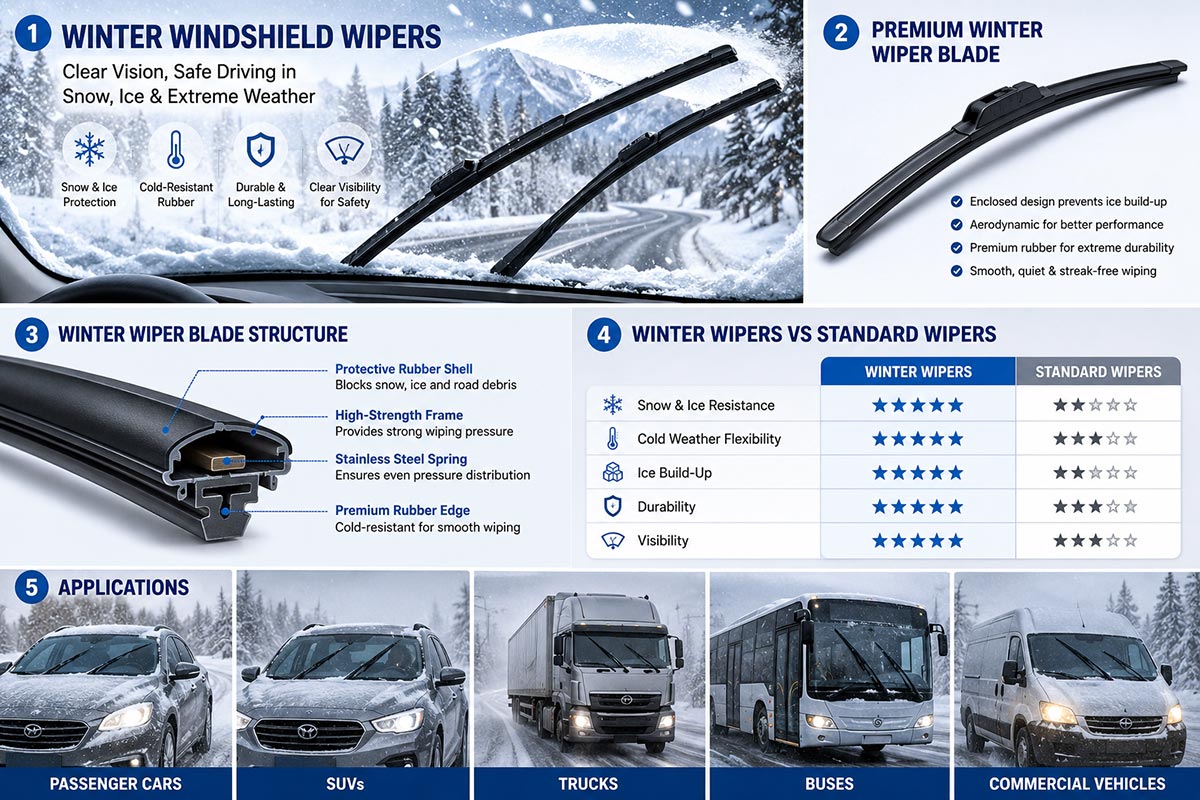
Winter weather presents some of the most challenging driving conditions of the year. Snow, freezing rain, sleet, frost, road salt, and ice can significantly reduce visibility, making every journey more dangerous. While drivers often prepare their vehicles with winter tires, antifreeze, and battery inspections, one essential safety component is frequently overlooked—the windshield wiper blades.
Standard wiper blades may perform well during warm seasons, but they often struggle in freezing temperatures. Ice accumulation, stiff rubber, and reduced flexibility can lead to streaking, skipping, or complete wiping failure. This is why many drivers choose winter windshield wipers, which are specifically designed to maintain reliable performance in harsh winter environments.
Whether you are a vehicle owner, automotive distributor, fleet manager, or parts retailer, understanding how winter windshield wipers work and how to choose the right products is essential. This guide explains everything you need to know, including features, benefits, materials, maintenance tips, and buying recommendations.
Winter windshield wipers are specially engineered wiper blades designed for reliable operation in snow, ice, and freezing temperatures. Unlike conventional blades, winter wipers feature protective construction and cold-resistant materials that prevent performance loss during extreme weather.
Their primary purpose is to keep the windshield clear by removing snow, slush, freezing rain, and water while maintaining consistent contact with the glass.
Because visibility is one of the most important factors in winter driving safety, winter windshield wipers have become a popular seasonal upgrade for drivers living in cold climates.
conventional wiper blades are generally designed for year-round driving but are not optimized for severe winter conditions.
Several problems commonly occur:
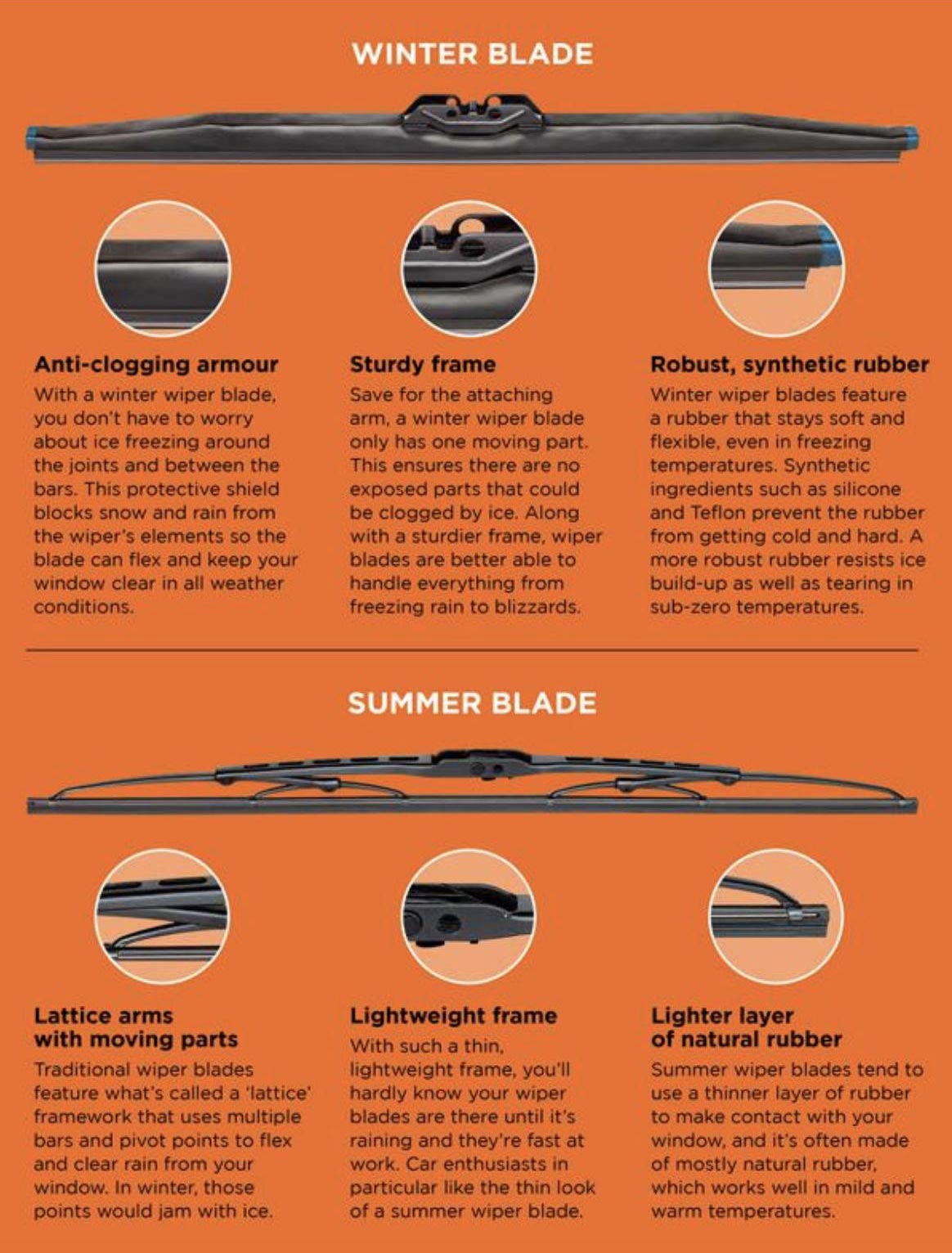
Low temperatures reduce the flexibility of ordinary rubber, preventing the blade from maintaining full contact with the windshield.
Snow and ice accumulate around exposed metal frames, restricting blade movement.
Frozen joints prevent the blade from distributing pressure evenly across the windshield.
Skipping, streaking, and incomplete wiping leave dangerous blind spots during snowfall or freezing rain.
These issues can significantly increase driving risks during winter months.
Professional winter windshield wipers are designed to overcome these challenges through improved engineering and materials.
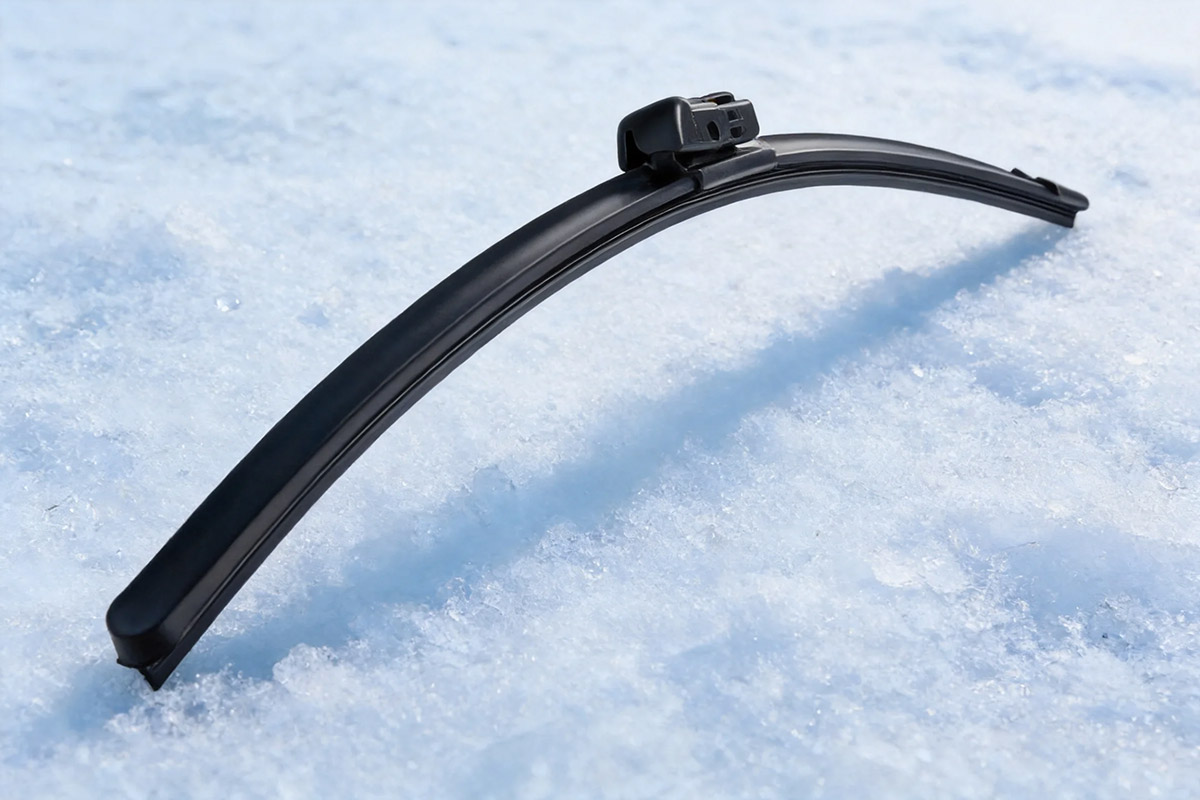
Most winter blades feature a fully enclosed rubber cover that seals the frame from snow, slush, and ice.
This prevents moving parts from freezing.
Premium winter blades use specially formulated natural or synthetic rubber compounds that remain flexible even in sub-zero temperatures.
Flexible rubber maintains consistent wiping performance throughout winter.
Winter blades are built with reinforced internal structures capable of handling heavy snow loads without deformation.
Many premium designs include aerodynamic features that improve windshield contact even during highway driving.
Road salt accelerates corrosion during winter.
High-quality winter windshield wipers use corrosion-resistant coatings to extend service life.
There are several common types available on the market.
These feature enclosed metal frames protected by thick rubber boots.
Advantages include:
• Excellent snow resistance
• Strong wiping force
• Affordable pricing
Beam blades eliminate exposed frame joints.
Benefits include:
• Better aerodynamics
• Even pressure distribution
• Reduced ice accumulation
• Quieter operation
Many premium winter windshield wipers now use beam blade technology.
Hybrid blades combine beam and conventional frame designs.
They provide:
• Improved durability
• Attractive appearance
• Stable high-speed performance
Material quality plays a major role in winter performance.
Provides flexibility and smooth wiping while remaining cost-effective.
Offers better resistance to ozone, chemicals, and temperature extremes.
silicone wiper blades remain flexible across a wider temperature range.
Additional advantages include:
• Longer lifespan
• UV resistance
• Water-repellent coating
• Lower operating noise
Many premium winter windshield wipers use silicone technology.
Choosing dedicated winter blades offers numerous benefits.
Winter blades remove snow and slush more efficiently, maintaining a clearer windshield.
Cold-resistant materials remain flexible even during severe freezing conditions.
Protective covers minimize snow accumulation around moving components.
Premium materials resist cracking and premature wear.
Clear visibility allows drivers to react more quickly to changing road conditions.
| Feature | Standard Wiper Blades | Winter Windshield Wipers |
|---|---|---|
| Snow Performance | Moderate | Excellent |
| Ice Resistance | Low | High |
| Cold Flexibility | Moderate | Excellent |
| Frame Protection | Open | Enclosed |
| Durability in Winter | Standard | Superior |
| Visibility | Good | Excellent |
Although winter blades may cost slightly more, they offer superior performance throughout the winter season.
Several factors should be considered when purchasing new blades.
Always select the correct length specified by the vehicle manufacturer.
Incorrect sizes may reduce wiping efficiency.
Ensure the adapter system matches your vehicle's wiper arm.
Many modern products include multiple adapters for universal installation.
Drivers in areas with heavy snowfall should prioritize enclosed winter designs.
Regions with mixed weather may benefit from premium beam blades.
Rubber provides excellent value.
Silicone offers premium durability and longer service life.
Choose manufacturers with proven quality control and reliable aftermarket support.
Replacing winter windshield wipers is usually straightforward.
General installation steps include:
• Remove the old blade.
• Inspect the wiper arm.
• Attach the new adapter.
• Lock the blade securely.
• Test wiping performance with washer fluid.
Proper installation ensures safe operation.
Maintenance extends blade life and improves performance.
Recommended practices include:
• Remove accumulated snow before driving.
• Never force frozen blades.
• Use winter windshield washer fluid.
• Clean blade edges regularly.
• Lift blades during heavy snowfall when parked.
• Replace worn blades immediately.
Routine maintenance prevents unnecessary damage.
Many drivers unintentionally shorten blade lifespan.
Avoid these mistakes:
• Using hot water to remove ice
• Operating frozen blades
• Ignoring streaking
• Delaying replacement
• Running dry wipers on icy glass
These habits accelerate blade wear.
Winter windshield wipers are widely used across numerous industries.
Applications include:
• Passenger vehicles
• SUVs
• Pickup trucks
• Commercial trucks
• Public buses
• Emergency vehicles
• Construction equipment
• Agricultural machinery
• Railway systems
• Marine vessels operating in cold regions
Heavy-duty winter blades improve visibility in demanding environments.
A professional manufacturer should provide:
• High-quality materials
• Advanced production technology
• Strict quality inspection
• OEM and ODM capability
• Wide product range
• Stable production capacity
• International export experience
Reliable suppliers ensure consistent quality for distributors and automotive brands worldwide.

The industry continues to evolve with new technologies.
Future innovations include:
• Improved silicone compounds
• Smarter aerodynamic designs
• Lightweight composite materials
• Enhanced hydrophobic coatings
• Better compatibility with ADAS-equipped vehicles
• More environmentally friendly manufacturing
These developments will continue improving winter driving safety.
Yes. They provide better visibility, improved flexibility, and greater resistance to snow and ice compared with standard wiper blades.
They can, although many drivers prefer switching to conventional or beam blades during warmer months for optimal performance and appearance.
Depending on climate and usage, premium winter blades generally last one winter season or longer with proper maintenance.
Silicone blades often offer longer lifespan, quieter operation, and better resistance to extreme temperatures.
Yes. Replacing both blades at the same time helps maintain even wiping performance and balanced visibility.
Winter driving demands equipment that performs reliably under the harshest weather conditions, and windshield wiper blades are no exception. Winter windshield wipers are specifically engineered to resist freezing temperatures, prevent ice build-up, and maintain clear visibility during snow, sleet, and freezing rain.
Compared with standard blades, winter wipers offer superior cold-weather flexibility, stronger structural protection, and more consistent wiping performance, making them an essential investment for drivers in cold climates. Whether you choose high-quality rubber or premium silicone models, selecting the correct size, maintaining the blades properly, and replacing them when worn will significantly improve driving safety.
For automotive distributors, retailers, and fleet operators, offering reliable winter windshield wipers from a trusted manufacturer ensures customers receive dependable products capable of meeting the demands of severe winter conditions while delivering long-lasting value.
This website uses cookies to ensure you get the best experience on our website.

 Portugues
 Pусский
 العربية
 中文



 WhatsApp
 Phone
Comment
(0)